
Why Our Pipe Organ Still Matters

Updated: Mar 10
and how we're taking care of it
If you were with us for the Christmas Eve service this year, you heard it.
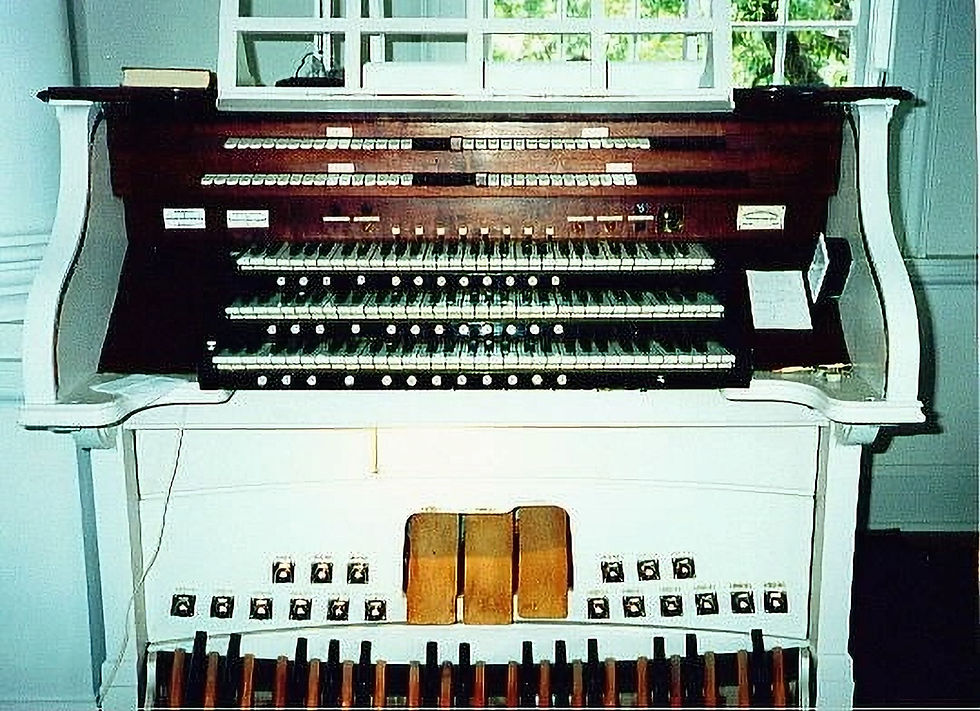
Not just sound, but presence. The organ carried the room, supported congregational singing, and gave weight to moments that needed it. From my pew, I can say simply: it was a joy to use the instrument so fully again.
That didn't happen by accident.
Over the past several years, First Unitarian has been quietly, thoughtfully caring for one of its most significant assets: our historic pipe organ. This hasn't been about upgrades or expansion, and it certainly hasn't been about emergency fixes. It's been about stewardship, doing the right work at the right time so that something we already value can continue to serve us well.
A remarkable instrument
Our organ is not just large; it's unusual and genuinely special. It includes elements dating from 1918, a major Aeolian‑Skinner installation from 1939, and a substantial rebuild after the 1984 fire. What we have today is a 52‑rank, three‑manual instrument, thousands of individual pipes, designed to be expressive, flexible, and deeply musical.

In practical terms, it's capable of everything from the quietest meditation to full, joyful proclamation. In less practical terms, it shapes how our sanctuary feels.
Like any instrument of this scale, it requires regular care. When that care is deferred, especially after years of roof leaks and limited access, small issues accumulate. That's where we found ourselves a few years ago.
Taking stock, and taking action
In early 2025, with Board approval, I invited a professional pipe organ technician to conduct a thorough assessment of the instrument. The conclusion was encouraging: the organ is fundamentally healthy, musically rewarding and absolutely worth caring for. The challenges identified were not dramatic failures, but predictable results of deferred maintenance combined with water intrusion.

Crucially, roof repairs were already underway. That allowed us to take a measured, phased approach rather than reacting piecemeal.
Phase 1: Initial Repair and Cleanup (Fall 2025)
Phase 1 took place immediately after roof completion and focused on stabilization—addressing the most immediate consequences of water damage and years of limited access.
Phase 1 included:
Repair of water‑damaged chest valves in the Choir Division
Removal of accumulated debris from the organ chambers
Securing cables, wind lines, and loose components
Outcome: Restored baseline reliability and prepared the instrument for regular use again, including successful use at Christmas Eve 2025.
Most importantly, Phase 1 created a solid foundation for ongoing care rather than repeated emergency fixes.

Phase 2: Year One Maintenance & Stabilization (2026)
With the building envelope now secure, the Board approved moving forward with Phase 2, beginning in April 2026.
This phase shifts the focus from repair to preventive care, the kind of attention a large, complex instrument requires to function consistently.
Phase 2 includes:
Three technician visits across the year
Two visits focused on tuning and minor corrective repairs
One visit focused on deeper mechanical work, prioritizing the Choir Division
Phase 2 protects the work already done, addresses lingering stability issues and brings the organ closer to predictable, dependable performance week after week.
If approved, Phase 3: Year Two Continued Restoration (2027)
Phase 3 continues this momentum and focuses on consolidation and evaluation.
Phase 3 includes:
Three technician visits
Continued tuning and corrective repairs
Careful assessment of progress toward full functionality
This is the phase where the organ transitions from "recovered" to fully dependable—the point at which workarounds disappear, and the instrument simply does its job.

Phase 4: Ongoing Maintenance (2028 and beyond)
Once the organ reaches that stable condition, the plan becomes refreshingly simple.
Phase 4 represents normal, best‑practice care:
Two technician visits per year
Seasonal tuning and routine upkeep
This is the level of care many institutions maintain for decades. It's not restoration or renovation, just regular attention that prevents small issues from becoming large ones.
Why this matters
We are not asking for money.
We are not launching a campaign.
We are not sounding an alarm.
What we are doing is naming the value of something that quietly supports our life together.

If we had to replace our pipe organ today with an instrument of similar size and quality, the cost would likely exceed one million dollars. Instead, through steady, board‑approved stewardship, we are preserving a remarkable instrument with modest, predictable care.
When this work is successful, you may not notice it at all.
The organ will simply:
Sound when it's supposed to
Stay in tune
Support congregational singing or concerts
Carry moments of joy, reflection, and remembrance
Do its work without drawing attention to its mechanics
That quiet reliability is not accidental. It's the result of planning, follow‑through and shared care.

Looking ahead
I'm grateful to the Board for its steady support and for recognizing that stewardship isn't always flashy. Sometimes it's simply doing the next right thing at the right time.
With regular care, this instrument can continue to serve First Unitarian, not as a museum piece, but as a living voice in our shared life, for generations to come.
Thank you for listening. Thank you for caring. And thank you for all the ways you help sustain the music that sustains us.
William
“To my eyes and ears the organ will ever be the King of Instruments.”
— Wolfgang Amadeus Mozart


